"The Society that separates its Scholars from its Warriors, will have its thinking done by cowards and its fighting done by fools." Thucydides
PURPOSE: Become the Scholar Warrior for your Goals
Improve Every Single Day!
Improve Yourself 1% a Day = 3600%+ in a Year
Thought-Technique-Strategy of the Week:

Create Your Powerful Identity
Let's say you wish to excel in the art of painting. Or open your own woodworking business. Or become a Filmmaker which I did many years ago. The key is to utilize a Powerful Identity in reframing your Focus. Let's stick with painter for the moment.
Use the words: "I am a painter." The powerful use of the "I am..." phrase welds this new outlook to you mentally, intellectually but, more importantly, emotionally. Why emotionally? When you talk about painting (or any very exciting goal), then you can feel the electrical excitement within your body and Being.
"Being" is the act of existing within this newly embraced identity. Then you grow and become.
READ THE MAIN ARTICLE HERE
7 Actions To Change Your Life


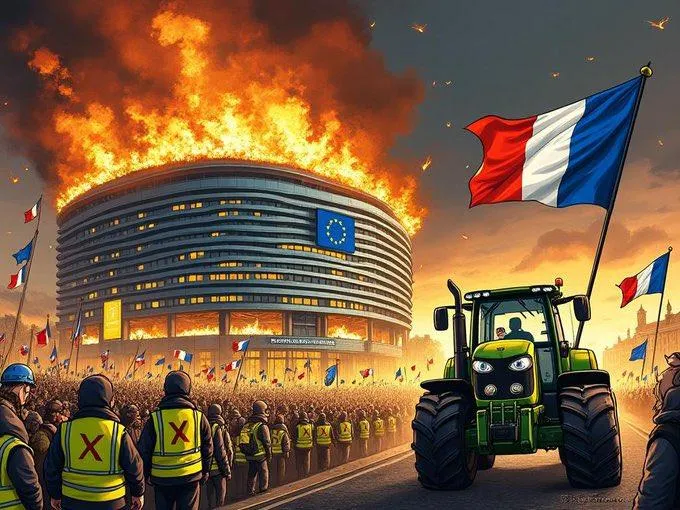
7 Reasons for the European Farmer's Revolt against EU Diktat
European farmers across the continent are revolting against the EU's mandates on farming, including the killing of livestock and other excessive regulatory nonsense.
Farmers mean Food. Food means Life. Pretty simple equation. But the incompetents in the EU don't understand this perspectives. Protests have blown up over the last few days, brewing for years across almost every European country.
Here are 7 key reasons why farmers across the EU have been protesting against EU mandates and policies, drawing from ongoing demonstrations in 2024-2025. Each includes specific examples and headlines from recent events.
EU-Mercosur Free Trade Agreement
Farmers oppose the deal, fearing an influx of cheaper South American imports (e.g., beef, sugar, poultry) produced under less stringent environmental and pesticide rules, undercutting EU producers.Headline: "Angry farmers block Brussels roads with tractors over Mercosur trade deal" (Al Jazeera, December 18, 2025) — Thousands of farmers protested in Brussels, hurling potatoes and clashing with police during an EU summit.
European Green Deal Environmental Regulations
Strict rules, including nitrogen emissions reductions, pesticide bans, and land set-aside requirements, increase costs and limit production while aiming for carbon neutrality by 2050.Headline: "European farmer protests risk eroding the climate agenda" (PIIE, 2024) — Protests targeted Green Deal policies seen as burdensome without adequate support.
Cheap Imports from Ukraine
Duty-free Ukrainian grain and products flood the market post-Russia invasion, depressing local prices despite EU solidarity measures.Headline: "Why are farmers across Europe protesting?" (DW, February 2024) — Eastern European farmers, especially in Poland, blocked borders over unfair competition from Ukrainian imports.
Excessive Bureaucracy and Red Tape
Complex administrative requirements for subsidies and compliance overwhelm farmers, adding costs without benefits.Headline: "Europe's restless farmers are forcing policymakers to act" (Reuters, April 2024) — Protests highlighted demands to reduce burdensome paperwork and inspections.
Low Farm Incomes and Falling Food Prices
Rising input costs (energy, fertilizer) combined with declining producer prices squeeze margins, exacerbated by inflation and market pressures.Headline: "Farmers’ protests have erupted across Europe. Here’s why" (CNN, February 2024) — Demonstrations focused on shrinking incomes amid high costs and supermarket pricing power.
Nitrate and Nitrogen Emission Curbs (Nitrates Directive)
Limits on fertilizer and manure use to prevent water pollution force farm restructurings, particularly in intensive livestock areas.Example: Dutch and Belgian farmers protested nitrogen reduction plans requiring livestock cuts; headline reference in Wikipedia's 2023–2024 protests summary, with ongoing grievances in northern Europe.
Common Agricultural Policy (CAP) Reforms and Future Funding Uncertainty
Shifts toward greener practices and fears of subsidy cuts post-2027 reduce direct income support while adding conditions.Headline: "A farmer throws a potato... during a protest to denounce the reforms of the Common Agricultural Policy" (Al Jazeera/AFP, December 18, 2025) — Brussels protests explicitly targeted CAP changes and trade deals.
These protests, peaking in late 2025 around the Mercosur debate, reflect cumulative frustrations with policies perceived as prioritizing environmental goals and trade over farmer viability. The EU has responded with some concessions, like delaying Mercosur and simplifying rules, but tensions persist.
Some posts on X certainly explain the Farmer's stands.


7 Reasons for the European Farmer's Revolt against EU Diktat
European farmers across the continent are revolting against the EU's mandates on farming, including the killing of livestock and other excessive regulatory nonsense.
Farmers mean Food. Food means Life. Pretty simple equation. But the incompetents in the EU don't understand this perspectives. Protests have blown up over the last few days, brewing for years across almost every European country.
Here are 7 key reasons why farmers across the EU have been protesting against EU mandates and policies, drawing from ongoing demonstrations in 2024-2025. Each includes specific examples and headlines from recent events.
EU-Mercosur Free Trade Agreement
Farmers oppose the deal, fearing an influx of cheaper South American imports (e.g., beef, sugar, poultry) produced under less stringent environmental and pesticide rules, undercutting EU producers.Headline: "Angry farmers block Brussels roads with tractors over Mercosur trade deal" (Al Jazeera, December 18, 2025) — Thousands of farmers protested in Brussels, hurling potatoes and clashing with police during an EU summit.
European Green Deal Environmental Regulations
Strict rules, including nitrogen emissions reductions, pesticide bans, and land set-aside requirements, increase costs and limit production while aiming for carbon neutrality by 2050.Headline: "European farmer protests risk eroding the climate agenda" (PIIE, 2024) — Protests targeted Green Deal policies seen as burdensome without adequate support.
Cheap Imports from Ukraine
Duty-free Ukrainian grain and products flood the market post-Russia invasion, depressing local prices despite EU solidarity measures.Headline: "Why are farmers across Europe protesting?" (DW, February 2024) — Eastern European farmers, especially in Poland, blocked borders over unfair competition from Ukrainian imports.
Excessive Bureaucracy and Red Tape
Complex administrative requirements for subsidies and compliance overwhelm farmers, adding costs without benefits.Headline: "Europe's restless farmers are forcing policymakers to act" (Reuters, April 2024) — Protests highlighted demands to reduce burdensome paperwork and inspections.
Low Farm Incomes and Falling Food Prices
Rising input costs (energy, fertilizer) combined with declining producer prices squeeze margins, exacerbated by inflation and market pressures.Headline: "Farmers’ protests have erupted across Europe. Here’s why" (CNN, February 2024) — Demonstrations focused on shrinking incomes amid high costs and supermarket pricing power.
Nitrate and Nitrogen Emission Curbs (Nitrates Directive)
Limits on fertilizer and manure use to prevent water pollution force farm restructurings, particularly in intensive livestock areas.Example: Dutch and Belgian farmers protested nitrogen reduction plans requiring livestock cuts; headline reference in Wikipedia's 2023–2024 protests summary, with ongoing grievances in northern Europe.
Common Agricultural Policy (CAP) Reforms and Future Funding Uncertainty
Shifts toward greener practices and fears of subsidy cuts post-2027 reduce direct income support while adding conditions.Headline: "A farmer throws a potato... during a protest to denounce the reforms of the Common Agricultural Policy" (Al Jazeera/AFP, December 18, 2025) — Brussels protests explicitly targeted CAP changes and trade deals.
These protests, peaking in late 2025 around the Mercosur debate, reflect cumulative frustrations with policies perceived as prioritizing environmental goals and trade over farmer viability. The EU has responded with some concessions, like delaying Mercosur and simplifying rules, but tensions persist.
Some posts on X certainly explain the Farmer's stands.
7 Reasons for the European Farmer's Revolt against EU Diktat
European farmers across the continent are revolting against the EU's mandates on farming, including the killing of livestock and other excessive regulatory nonsense.
Farmers mean Food. Food means Life. Pretty simple equation. But the incompetents in the EU don't understand this perspectives. Protests have blown up over the last few days, brewing for years across almost every European country.
Here are 7 key reasons why farmers across the EU have been protesting against EU mandates and policies, drawing from ongoing demonstrations in 2024-2025. Each includes specific examples and headlines from recent events.
EU-Mercosur Free Trade Agreement
Farmers oppose the deal, fearing an influx of cheaper South American imports (e.g., beef, sugar, poultry) produced under less stringent environmental and pesticide rules, undercutting EU producers.Headline: "Angry farmers block Brussels roads with tractors over Mercosur trade deal" (Al Jazeera, December 18, 2025) — Thousands of farmers protested in Brussels, hurling potatoes and clashing with police during an EU summit.
European Green Deal Environmental Regulations
Strict rules, including nitrogen emissions reductions, pesticide bans, and land set-aside requirements, increase costs and limit production while aiming for carbon neutrality by 2050.Headline: "European farmer protests risk eroding the climate agenda" (PIIE, 2024) — Protests targeted Green Deal policies seen as burdensome without adequate support.
Cheap Imports from Ukraine
Duty-free Ukrainian grain and products flood the market post-Russia invasion, depressing local prices despite EU solidarity measures.Headline: "Why are farmers across Europe protesting?" (DW, February 2024) — Eastern European farmers, especially in Poland, blocked borders over unfair competition from Ukrainian imports.
Excessive Bureaucracy and Red Tape
Complex administrative requirements for subsidies and compliance overwhelm farmers, adding costs without benefits.Headline: "Europe's restless farmers are forcing policymakers to act" (Reuters, April 2024) — Protests highlighted demands to reduce burdensome paperwork and inspections.
Low Farm Incomes and Falling Food Prices
Rising input costs (energy, fertilizer) combined with declining producer prices squeeze margins, exacerbated by inflation and market pressures.Headline: "Farmers’ protests have erupted across Europe. Here’s why" (CNN, February 2024) — Demonstrations focused on shrinking incomes amid high costs and supermarket pricing power.
Nitrate and Nitrogen Emission Curbs (Nitrates Directive)
Limits on fertilizer and manure use to prevent water pollution force farm restructurings, particularly in intensive livestock areas.Example: Dutch and Belgian farmers protested nitrogen reduction plans requiring livestock cuts; headline reference in Wikipedia's 2023–2024 protests summary, with ongoing grievances in northern Europe.
Common Agricultural Policy (CAP) Reforms and Future Funding Uncertainty
Shifts toward greener practices and fears of subsidy cuts post-2027 reduce direct income support while adding conditions.Headline: "A farmer throws a potato... during a protest to denounce the reforms of the Common Agricultural Policy" (Al Jazeera/AFP, December 18, 2025) — Brussels protests explicitly targeted CAP changes and trade deals.
These protests, peaking in late 2025 around the Mercosur debate, reflect cumulative frustrations with policies perceived as prioritizing environmental goals and trade over farmer viability. The EU has responded with some concessions, like delaying Mercosur and simplifying rules, but tensions persist.
Some posts on X certainly explain the Farmer's stands.



7 Reasons for the European Farmer's Revolt against EU Diktat
European farmers across the continent are revolting against the EU's mandates on farming, including the killing of livestock and other excessive regulatory nonsense.
Farmers mean Food. Food means Life. Pretty simple equation. But the incompetents in the EU don't understand this perspectives. Protests have blown up over the last few days, brewing for years across almost every European country.
Here are 7 key reasons why farmers across the EU have been protesting against EU mandates and policies, drawing from ongoing demonstrations in 2024-2025. Each includes specific examples and headlines from recent events.
EU-Mercosur Free Trade Agreement
Farmers oppose the deal, fearing an influx of cheaper South American imports (e.g., beef, sugar, poultry) produced under less stringent environmental and pesticide rules, undercutting EU producers.Headline: "Angry farmers block Brussels roads with tractors over Mercosur trade deal" (Al Jazeera, December 18, 2025) — Thousands of farmers protested in Brussels, hurling potatoes and clashing with police during an EU summit.
European Green Deal Environmental Regulations
Strict rules, including nitrogen emissions reductions, pesticide bans, and land set-aside requirements, increase costs and limit production while aiming for carbon neutrality by 2050.Headline: "European farmer protests risk eroding the climate agenda" (PIIE, 2024) — Protests targeted Green Deal policies seen as burdensome without adequate support.
Cheap Imports from Ukraine
Duty-free Ukrainian grain and products flood the market post-Russia invasion, depressing local prices despite EU solidarity measures.Headline: "Why are farmers across Europe protesting?" (DW, February 2024) — Eastern European farmers, especially in Poland, blocked borders over unfair competition from Ukrainian imports.
Excessive Bureaucracy and Red Tape
Complex administrative requirements for subsidies and compliance overwhelm farmers, adding costs without benefits.Headline: "Europe's restless farmers are forcing policymakers to act" (Reuters, April 2024) — Protests highlighted demands to reduce burdensome paperwork and inspections.
Low Farm Incomes and Falling Food Prices
Rising input costs (energy, fertilizer) combined with declining producer prices squeeze margins, exacerbated by inflation and market pressures.Headline: "Farmers’ protests have erupted across Europe. Here’s why" (CNN, February 2024) — Demonstrations focused on shrinking incomes amid high costs and supermarket pricing power.
Nitrate and Nitrogen Emission Curbs (Nitrates Directive)
Limits on fertilizer and manure use to prevent water pollution force farm restructurings, particularly in intensive livestock areas.Example: Dutch and Belgian farmers protested nitrogen reduction plans requiring livestock cuts; headline reference in Wikipedia's 2023–2024 protests summary, with ongoing grievances in northern Europe.
Common Agricultural Policy (CAP) Reforms and Future Funding Uncertainty
Shifts toward greener practices and fears of subsidy cuts post-2027 reduce direct income support while adding conditions.Headline: "A farmer throws a potato... during a protest to denounce the reforms of the Common Agricultural Policy" (Al Jazeera/AFP, December 18, 2025) — Brussels protests explicitly targeted CAP changes and trade deals.
These protests, peaking in late 2025 around the Mercosur debate, reflect cumulative frustrations with policies perceived as prioritizing environmental goals and trade over farmer viability. The EU has responded with some concessions, like delaying Mercosur and simplifying rules, but tensions persist.
Some posts on X certainly explain the Farmer's stands.
7 Reasons for the European Farmer's Revolt against EU Diktat
European farmers across the continent are revolting against the EU's mandates on farming, including the killing of livestock and other excessive regulatory nonsense.
Farmers mean Food. Food means Life. Pretty simple equation. But the incompetents in the EU don't understand this perspectives. Protests have blown up over the last few days, brewing for years across almost every European country.
Here are 7 key reasons why farmers across the EU have been protesting against EU mandates and policies, drawing from ongoing demonstrations in 2024-2025. Each includes specific examples and headlines from recent events.
EU-Mercosur Free Trade Agreement
Farmers oppose the deal, fearing an influx of cheaper South American imports (e.g., beef, sugar, poultry) produced under less stringent environmental and pesticide rules, undercutting EU producers.Headline: "Angry farmers block Brussels roads with tractors over Mercosur trade deal" (Al Jazeera, December 18, 2025) — Thousands of farmers protested in Brussels, hurling potatoes and clashing with police during an EU summit.
European Green Deal Environmental Regulations
Strict rules, including nitrogen emissions reductions, pesticide bans, and land set-aside requirements, increase costs and limit production while aiming for carbon neutrality by 2050.Headline: "European farmer protests risk eroding the climate agenda" (PIIE, 2024) — Protests targeted Green Deal policies seen as burdensome without adequate support.
Cheap Imports from Ukraine
Duty-free Ukrainian grain and products flood the market post-Russia invasion, depressing local prices despite EU solidarity measures.Headline: "Why are farmers across Europe protesting?" (DW, February 2024) — Eastern European farmers, especially in Poland, blocked borders over unfair competition from Ukrainian imports.
Excessive Bureaucracy and Red Tape
Complex administrative requirements for subsidies and compliance overwhelm farmers, adding costs without benefits.Headline: "Europe's restless farmers are forcing policymakers to act" (Reuters, April 2024) — Protests highlighted demands to reduce burdensome paperwork and inspections.
Low Farm Incomes and Falling Food Prices
Rising input costs (energy, fertilizer) combined with declining producer prices squeeze margins, exacerbated by inflation and market pressures.Headline: "Farmers’ protests have erupted across Europe. Here’s why" (CNN, February 2024) — Demonstrations focused on shrinking incomes amid high costs and supermarket pricing power.
Nitrate and Nitrogen Emission Curbs (Nitrates Directive)
Limits on fertilizer and manure use to prevent water pollution force farm restructurings, particularly in intensive livestock areas.Example: Dutch and Belgian farmers protested nitrogen reduction plans requiring livestock cuts; headline reference in Wikipedia's 2023–2024 protests summary, with ongoing grievances in northern Europe.
Common Agricultural Policy (CAP) Reforms and Future Funding Uncertainty
Shifts toward greener practices and fears of subsidy cuts post-2027 reduce direct income support while adding conditions.Headline: "A farmer throws a potato... during a protest to denounce the reforms of the Common Agricultural Policy" (Al Jazeera/AFP, December 18, 2025) — Brussels protests explicitly targeted CAP changes and trade deals.
These protests, peaking in late 2025 around the Mercosur debate, reflect cumulative frustrations with policies perceived as prioritizing environmental goals and trade over farmer viability. The EU has responded with some concessions, like delaying Mercosur and simplifying rules, but tensions persist.
Some posts on X certainly explain the Farmer's stands.
7 Reasons for the European Farmer's Revolt against EU Diktat
European farmers across the continent are revolting against the EU's mandates on farming, including the killing of livestock and other excessive regulatory nonsense.
Farmers mean Food. Food means Life. Pretty simple equation. But the incompetents in the EU don't understand this perspectives. Protests have blown up over the last few days, brewing for years across almost every European country.
Here are 7 key reasons why farmers across the EU have been protesting against EU mandates and policies, drawing from ongoing demonstrations in 2024-2025. Each includes specific examples and headlines from recent events.
EU-Mercosur Free Trade Agreement
Farmers oppose the deal, fearing an influx of cheaper South American imports (e.g., beef, sugar, poultry) produced under less stringent environmental and pesticide rules, undercutting EU producers.Headline: "Angry farmers block Brussels roads with tractors over Mercosur trade deal" (Al Jazeera, December 18, 2025) — Thousands of farmers protested in Brussels, hurling potatoes and clashing with police during an EU summit.
European Green Deal Environmental Regulations
Strict rules, including nitrogen emissions reductions, pesticide bans, and land set-aside requirements, increase costs and limit production while aiming for carbon neutrality by 2050.Headline: "European farmer protests risk eroding the climate agenda" (PIIE, 2024) — Protests targeted Green Deal policies seen as burdensome without adequate support.
Cheap Imports from Ukraine
Duty-free Ukrainian grain and products flood the market post-Russia invasion, depressing local prices despite EU solidarity measures.Headline: "Why are farmers across Europe protesting?" (DW, February 2024) — Eastern European farmers, especially in Poland, blocked borders over unfair competition from Ukrainian imports.
Excessive Bureaucracy and Red Tape
Complex administrative requirements for subsidies and compliance overwhelm farmers, adding costs without benefits.Headline: "Europe's restless farmers are forcing policymakers to act" (Reuters, April 2024) — Protests highlighted demands to reduce burdensome paperwork and inspections.
Low Farm Incomes and Falling Food Prices
Rising input costs (energy, fertilizer) combined with declining producer prices squeeze margins, exacerbated by inflation and market pressures.Headline: "Farmers’ protests have erupted across Europe. Here’s why" (CNN, February 2024) — Demonstrations focused on shrinking incomes amid high costs and supermarket pricing power.
Nitrate and Nitrogen Emission Curbs (Nitrates Directive)
Limits on fertilizer and manure use to prevent water pollution force farm restructurings, particularly in intensive livestock areas.Example: Dutch and Belgian farmers protested nitrogen reduction plans requiring livestock cuts; headline reference in Wikipedia's 2023–2024 protests summary, with ongoing grievances in northern Europe.
Common Agricultural Policy (CAP) Reforms and Future Funding Uncertainty
Shifts toward greener practices and fears of subsidy cuts post-2027 reduce direct income support while adding conditions.Headline: "A farmer throws a potato... during a protest to denounce the reforms of the Common Agricultural Policy" (Al Jazeera/AFP, December 18, 2025) — Brussels protests explicitly targeted CAP changes and trade deals.
These protests, peaking in late 2025 around the Mercosur debate, reflect cumulative frustrations with policies perceived as prioritizing environmental goals and trade over farmer viability. The EU has responded with some concessions, like delaying Mercosur and simplifying rules, but tensions persist.
Some posts on X certainly explain the Farmer's stands.
7 Reasons for the European Farmer's Revolt against EU Diktat
European farmers across the continent are revolting against the EU's mandates on farming, including the killing of livestock and other excessive regulatory nonsense.
Farmers mean Food. Food means Life. Pretty simple equation. But the incompetents in the EU don't understand this perspectives. Protests have blown up over the last few days, brewing for years across almost every European country.
Here are 7 key reasons why farmers across the EU have been protesting against EU mandates and policies, drawing from ongoing demonstrations in 2024-2025. Each includes specific examples and headlines from recent events.
EU-Mercosur Free Trade Agreement
Farmers oppose the deal, fearing an influx of cheaper South American imports (e.g., beef, sugar, poultry) produced under less stringent environmental and pesticide rules, undercutting EU producers.Headline: "Angry farmers block Brussels roads with tractors over Mercosur trade deal" (Al Jazeera, December 18, 2025) — Thousands of farmers protested in Brussels, hurling potatoes and clashing with police during an EU summit.
European Green Deal Environmental Regulations
Strict rules, including nitrogen emissions reductions, pesticide bans, and land set-aside requirements, increase costs and limit production while aiming for carbon neutrality by 2050.Headline: "European farmer protests risk eroding the climate agenda" (PIIE, 2024) — Protests targeted Green Deal policies seen as burdensome without adequate support.
Cheap Imports from Ukraine
Duty-free Ukrainian grain and products flood the market post-Russia invasion, depressing local prices despite EU solidarity measures.Headline: "Why are farmers across Europe protesting?" (DW, February 2024) — Eastern European farmers, especially in Poland, blocked borders over unfair competition from Ukrainian imports.
Excessive Bureaucracy and Red Tape
Complex administrative requirements for subsidies and compliance overwhelm farmers, adding costs without benefits.Headline: "Europe's restless farmers are forcing policymakers to act" (Reuters, April 2024) — Protests highlighted demands to reduce burdensome paperwork and inspections.
Low Farm Incomes and Falling Food Prices
Rising input costs (energy, fertilizer) combined with declining producer prices squeeze margins, exacerbated by inflation and market pressures.Headline: "Farmers’ protests have erupted across Europe. Here’s why" (CNN, February 2024) — Demonstrations focused on shrinking incomes amid high costs and supermarket pricing power.
Nitrate and Nitrogen Emission Curbs (Nitrates Directive)
Limits on fertilizer and manure use to prevent water pollution force farm restructurings, particularly in intensive livestock areas.Example: Dutch and Belgian farmers protested nitrogen reduction plans requiring livestock cuts; headline reference in Wikipedia's 2023–2024 protests summary, with ongoing grievances in northern Europe.
Common Agricultural Policy (CAP) Reforms and Future Funding Uncertainty
Shifts toward greener practices and fears of subsidy cuts post-2027 reduce direct income support while adding conditions.Headline: "A farmer throws a potato... during a protest to denounce the reforms of the Common Agricultural Policy" (Al Jazeera/AFP, December 18, 2025) — Brussels protests explicitly targeted CAP changes and trade deals.
These protests, peaking in late 2025 around the Mercosur debate, reflect cumulative frustrations with policies perceived as prioritizing environmental goals and trade over farmer viability. The EU has responded with some concessions, like delaying Mercosur and simplifying rules, but tensions persist.
Some posts on X certainly explain the Farmer's stands.
Take Action Today!
SCHOLAR WARRIOR WAY - COURSE

Scholar Warrior Way
Take Action to Transform Yourself
By taking the Scholar Warrior Way Course, you will get Michael's program for Self-Improvement in his pursuit of Creative Excellence in Writing, Filmmaking, Martial arts and his other pursuits from his major curious outlook. Here are the 7 Steps that he uses....
Powerful Why - the Key to Enthusiasm and Fulfillment
Scholar Warrior Identity - Embracing the new Mentality - now!
Your Morning Routine - Starting the day Right.
Brainstorming Your How - Strategy thinking and tactics
Create Your Own Systems - Become efficient with predictable results
Building Transforming Habits - Habit creates Destiny
The Art of Sleep - Long ignored but a necessary health break.
FAQS
What is The Purpose of the "ScholarWarriorWay" ?
By engaging in the mental perspective of the Scholar Warrior, you embrace two aspects of your life: The Scholar with a constant focus on self-development and self-improvement. The Warrior whereby you learn techniques about courage, action and derring-do to achieve your true authentic goals for a fulfilled life.
How much does Scholar Warrior Way cost?
The cost of could be absolutely no money if you just want to get on our newsletter to read the various articles on the website. If you want to take the courses on various levels, then you might spend $200-300 per year. Think of it this way: If you could improve yourself 100-200-300-1000-3600% in a single year, then how much is it worth? The price of two meals and drinks at a restaurant that you'll never remember? Make a better life choice.
How do I know I work with the ScholarWarriorWay?
ScholarWarriorWay is broken down into 7 Major Strategies. You can pick one and work on it for a few weeks, then add another strategies. They start with the Powerful Why and end with the Art of Sleep.


Facebook
Instagram
X
LinkedIn
Youtube