"The Society that separates its Scholars from its Warriors, will have its thinking done by cowards and its fighting done by fools." Thucydides
PURPOSE: Become the Scholar Warrior for your Goals
Improve Every Single Day!
Improve Yourself 1% a Day = 3600%+ in a Year
Thought-Technique-Strategy of the Week:
Create Your Powerful Identity
Let's say you wish to excel in the art of painting. Or open your own woodworking business. Or become a Filmmaker which I did many years ago. The key is to utilize a Powerful Identity in reframing your Focus. Let's stick with painter for the moment.
Use the words: "I am a painter." The powerful use of the "I am..." phrase welds this new outlook to you mentally, intellectually but, more importantly, emotionally. Why emotionally? When you talk about painting (or any very exciting goal), then you can feel the electrical excitement within your body and Being.
"Being" is the act of existing within this newly embraced identity. Then you grow and become.
READ THE MAIN ARTICLE HERE
7 Actions To Change Your Life

SCHOLAR:YOUR CALENDAR MIGHT’VE BEEN WRONG
LEARN HISTORY FOR BETTER UNDERSTANDING
You may think that you have a modern, well-informed perspective on life.Perhaps, but can it be improved? Consider time.Your time. Country’s time.Infinite time.
Perspective was a term applied to paintings where objects were painted in a regular accurate way from a single viewpoint.Objects in the painting until then were just bigger or smaller, unadjusted for one’s position.Perspective today means point of view.
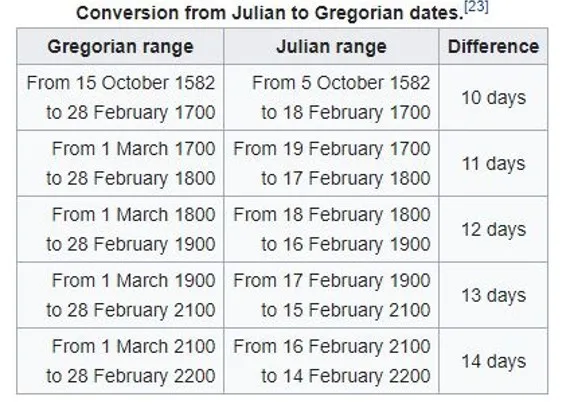
Today’s calendar is called the Gregorian Calendar.Devised because the older Julian calendar was off scientifically by ten days
TheGregorian calendar was decreed in 1582 by the papal bull Inter gravissimas by Pope Gregory XIII, to correct an error in the Julian calendar that was causing an erroneous calculation of the date of Easter. The Julian calendar had been based upon a year lasting 365.25 days, but this was slightly too long; in reality, it is about 365.2422 days,[b] and so over the centuries, the calendar had drifted increasingly out of alignment with the Earth's orbit. According to Gregory's scientific advisers, the calendar had acquired ten excess leap days since the First Council of Nicaea (which established the rule for dating Easter in AD 325).
So everything was too high by 0.0078 per year and it all added up.Makes one realizes that exactitude matters. The West adopted the Gregorian first.
The provided URL contains extensive information about the adoption of the Gregorian calendar across different regions and centuries. Here's a summary focusing on the five largest countries adopting it in the 16th, 17th, 18th, 19th, and 20th centuries:
16th Century
Spain: Adopted in 1582, following the papal bull by Pope Gregory XIII. The day after October 4, 1582, became October 15, 1582.
France: Adopted in December 1582, with December 9 followed by December 20.
Portugal: Adopted in 1582, alongside Spain.
Italy: Adopted in 1582, as part of the Papal States.
Poland-Lithuania: Adopted in 1582.
17th Century
Prussia: Adopted in 1612 under the influence of Catholic Poland.
Scotland: Adopted in 1600, earlier than the rest of Great Britain.
Netherlands (Provinces): Some provinces adopted it in the early 17th century.
Denmark-Norway: Adopted in 1700 (transition began in the late 17th century).
Sweden: Began a gradual transition in 1700.
18th Century
Great Britain and Colonies: Adopted in 1752, with September 2 followed by September 14.
Sweden: Completed the transition in 1753.
Switzerland (Protestant Cantons): Adopted in the 18th century.
Russia: Did not adopt until the 20th century, but neighboring regions began transitioning.
Germany (Protestant States): Adopted in 1700.
19th Century
Japan: Adopted in 1873, replacing the traditional lunisolar calendar.
Egypt: Adopted in the late 19th century for civil purposes.
China: Began using the Gregorian calendar in the early 20th century.
India: Transitioned in the late 19th century for administrative purposes.
Korea: Adopted in 1896.
20th Century
Russia: Adopted in 1918 after the October Revolution.
China: Officially adopted in 1912 with the Republic of China.
Turkey: Adopted in 1926.
Greece: Adopted in 1923.
Vietnam: Adopted in 1954.
This timeline highlights the gradual and regionally varied adoption of the Gregorian calendar, influenced by religious, political, and cultural factors. For more detailed information, you can refer to the original source1.
https://en.wikipedia.org/wiki/Adoption_of_the_Gregorian_calendar#Adoption_in_Eastern_Europe
https://en.wikipedia.org/wiki/Adoption_of_the_Gregorian_calendar#Adoption_in_Eastern_Europe

SCHOLAR:YOUR CALENDAR MIGHT’VE BEEN WRONG
LEARN HISTORY FOR BETTER UNDERSTANDING
You may think that you have a modern, well-informed perspective on life.Perhaps, but can it be improved? Consider time.Your time. Country’s time.Infinite time.
Perspective was a term applied to paintings where objects were painted in a regular accurate way from a single viewpoint.Objects in the painting until then were just bigger or smaller, unadjusted for one’s position.Perspective today means point of view.
Today’s calendar is called the Gregorian Calendar.Devised because the older Julian calendar was off scientifically by ten days
TheGregorian calendar was decreed in 1582 by the papal bull Inter gravissimas by Pope Gregory XIII, to correct an error in the Julian calendar that was causing an erroneous calculation of the date of Easter. The Julian calendar had been based upon a year lasting 365.25 days, but this was slightly too long; in reality, it is about 365.2422 days,[b] and so over the centuries, the calendar had drifted increasingly out of alignment with the Earth's orbit. According to Gregory's scientific advisers, the calendar had acquired ten excess leap days since the First Council of Nicaea (which established the rule for dating Easter in AD 325).
So everything was too high by 0.0078 per year and it all added up.Makes one realizes that exactitude matters. The West adopted the Gregorian first.
The provided URL contains extensive information about the adoption of the Gregorian calendar across different regions and centuries. Here's a summary focusing on the five largest countries adopting it in the 16th, 17th, 18th, 19th, and 20th centuries:
16th Century
Spain: Adopted in 1582, following the papal bull by Pope Gregory XIII. The day after October 4, 1582, became October 15, 1582.
France: Adopted in December 1582, with December 9 followed by December 20.
Portugal: Adopted in 1582, alongside Spain.
Italy: Adopted in 1582, as part of the Papal States.
Poland-Lithuania: Adopted in 1582.
17th Century
Prussia: Adopted in 1612 under the influence of Catholic Poland.
Scotland: Adopted in 1600, earlier than the rest of Great Britain.
Netherlands (Provinces): Some provinces adopted it in the early 17th century.
Denmark-Norway: Adopted in 1700 (transition began in the late 17th century).
Sweden: Began a gradual transition in 1700.
18th Century
Great Britain and Colonies: Adopted in 1752, with September 2 followed by September 14.
Sweden: Completed the transition in 1753.
Switzerland (Protestant Cantons): Adopted in the 18th century.
Russia: Did not adopt until the 20th century, but neighboring regions began transitioning.
Germany (Protestant States): Adopted in 1700.
19th Century
Japan: Adopted in 1873, replacing the traditional lunisolar calendar.
Egypt: Adopted in the late 19th century for civil purposes.
China: Began using the Gregorian calendar in the early 20th century.
India: Transitioned in the late 19th century for administrative purposes.
Korea: Adopted in 1896.
20th Century
Russia: Adopted in 1918 after the October Revolution.
China: Officially adopted in 1912 with the Republic of China.
Turkey: Adopted in 1926.
Greece: Adopted in 1923.
Vietnam: Adopted in 1954.
This timeline highlights the gradual and regionally varied adoption of the Gregorian calendar, influenced by religious, political, and cultural factors. For more detailed information, you can refer to the original source1.
https://en.wikipedia.org/wiki/Adoption_of_the_Gregorian_calendar#Adoption_in_Eastern_Europe
https://en.wikipedia.org/wiki/Adoption_of_the_Gregorian_calendar#Adoption_in_Eastern_Europe
SCHOLAR:YOUR CALENDAR MIGHT’VE BEEN WRONG
LEARN HISTORY FOR BETTER UNDERSTANDING
You may think that you have a modern, well-informed perspective on life.Perhaps, but can it be improved? Consider time.Your time. Country’s time.Infinite time.
Perspective was a term applied to paintings where objects were painted in a regular accurate way from a single viewpoint.Objects in the painting until then were just bigger or smaller, unadjusted for one’s position.Perspective today means point of view.
Today’s calendar is called the Gregorian Calendar.Devised because the older Julian calendar was off scientifically by ten days
TheGregorian calendar was decreed in 1582 by the papal bull Inter gravissimas by Pope Gregory XIII, to correct an error in the Julian calendar that was causing an erroneous calculation of the date of Easter. The Julian calendar had been based upon a year lasting 365.25 days, but this was slightly too long; in reality, it is about 365.2422 days,[b] and so over the centuries, the calendar had drifted increasingly out of alignment with the Earth's orbit. According to Gregory's scientific advisers, the calendar had acquired ten excess leap days since the First Council of Nicaea (which established the rule for dating Easter in AD 325).
So everything was too high by 0.0078 per year and it all added up.Makes one realizes that exactitude matters. The West adopted the Gregorian first.
The provided URL contains extensive information about the adoption of the Gregorian calendar across different regions and centuries. Here's a summary focusing on the five largest countries adopting it in the 16th, 17th, 18th, 19th, and 20th centuries:
16th Century
Spain: Adopted in 1582, following the papal bull by Pope Gregory XIII. The day after October 4, 1582, became October 15, 1582.
France: Adopted in December 1582, with December 9 followed by December 20.
Portugal: Adopted in 1582, alongside Spain.
Italy: Adopted in 1582, as part of the Papal States.
Poland-Lithuania: Adopted in 1582.
17th Century
Prussia: Adopted in 1612 under the influence of Catholic Poland.
Scotland: Adopted in 1600, earlier than the rest of Great Britain.
Netherlands (Provinces): Some provinces adopted it in the early 17th century.
Denmark-Norway: Adopted in 1700 (transition began in the late 17th century).
Sweden: Began a gradual transition in 1700.
18th Century
Great Britain and Colonies: Adopted in 1752, with September 2 followed by September 14.
Sweden: Completed the transition in 1753.
Switzerland (Protestant Cantons): Adopted in the 18th century.
Russia: Did not adopt until the 20th century, but neighboring regions began transitioning.
Germany (Protestant States): Adopted in 1700.
19th Century
Japan: Adopted in 1873, replacing the traditional lunisolar calendar.
Egypt: Adopted in the late 19th century for civil purposes.
China: Began using the Gregorian calendar in the early 20th century.
India: Transitioned in the late 19th century for administrative purposes.
Korea: Adopted in 1896.
20th Century
Russia: Adopted in 1918 after the October Revolution.
China: Officially adopted in 1912 with the Republic of China.
Turkey: Adopted in 1926.
Greece: Adopted in 1923.
Vietnam: Adopted in 1954.
This timeline highlights the gradual and regionally varied adoption of the Gregorian calendar, influenced by religious, political, and cultural factors. For more detailed information, you can refer to the original source1.
https://en.wikipedia.org/wiki/Adoption_of_the_Gregorian_calendar#Adoption_in_Eastern_Europe
https://en.wikipedia.org/wiki/Adoption_of_the_Gregorian_calendar#Adoption_in_Eastern_Europe


SCHOLAR:YOUR CALENDAR MIGHT’VE BEEN WRONG
LEARN HISTORY FOR BETTER UNDERSTANDING
You may think that you have a modern, well-informed perspective on life.Perhaps, but can it be improved? Consider time.Your time. Country’s time.Infinite time.
Perspective was a term applied to paintings where objects were painted in a regular accurate way from a single viewpoint.Objects in the painting until then were just bigger or smaller, unadjusted for one’s position.Perspective today means point of view.
Today’s calendar is called the Gregorian Calendar.Devised because the older Julian calendar was off scientifically by ten days
TheGregorian calendar was decreed in 1582 by the papal bull Inter gravissimas by Pope Gregory XIII, to correct an error in the Julian calendar that was causing an erroneous calculation of the date of Easter. The Julian calendar had been based upon a year lasting 365.25 days, but this was slightly too long; in reality, it is about 365.2422 days,[b] and so over the centuries, the calendar had drifted increasingly out of alignment with the Earth's orbit. According to Gregory's scientific advisers, the calendar had acquired ten excess leap days since the First Council of Nicaea (which established the rule for dating Easter in AD 325).
So everything was too high by 0.0078 per year and it all added up.Makes one realizes that exactitude matters. The West adopted the Gregorian first.
The provided URL contains extensive information about the adoption of the Gregorian calendar across different regions and centuries. Here's a summary focusing on the five largest countries adopting it in the 16th, 17th, 18th, 19th, and 20th centuries:
16th Century
Spain: Adopted in 1582, following the papal bull by Pope Gregory XIII. The day after October 4, 1582, became October 15, 1582.
France: Adopted in December 1582, with December 9 followed by December 20.
Portugal: Adopted in 1582, alongside Spain.
Italy: Adopted in 1582, as part of the Papal States.
Poland-Lithuania: Adopted in 1582.
17th Century
Prussia: Adopted in 1612 under the influence of Catholic Poland.
Scotland: Adopted in 1600, earlier than the rest of Great Britain.
Netherlands (Provinces): Some provinces adopted it in the early 17th century.
Denmark-Norway: Adopted in 1700 (transition began in the late 17th century).
Sweden: Began a gradual transition in 1700.
18th Century
Great Britain and Colonies: Adopted in 1752, with September 2 followed by September 14.
Sweden: Completed the transition in 1753.
Switzerland (Protestant Cantons): Adopted in the 18th century.
Russia: Did not adopt until the 20th century, but neighboring regions began transitioning.
Germany (Protestant States): Adopted in 1700.
19th Century
Japan: Adopted in 1873, replacing the traditional lunisolar calendar.
Egypt: Adopted in the late 19th century for civil purposes.
China: Began using the Gregorian calendar in the early 20th century.
India: Transitioned in the late 19th century for administrative purposes.
Korea: Adopted in 1896.
20th Century
Russia: Adopted in 1918 after the October Revolution.
China: Officially adopted in 1912 with the Republic of China.
Turkey: Adopted in 1926.
Greece: Adopted in 1923.
Vietnam: Adopted in 1954.
This timeline highlights the gradual and regionally varied adoption of the Gregorian calendar, influenced by religious, political, and cultural factors. For more detailed information, you can refer to the original source1.
https://en.wikipedia.org/wiki/Adoption_of_the_Gregorian_calendar#Adoption_in_Eastern_Europe
https://en.wikipedia.org/wiki/Adoption_of_the_Gregorian_calendar#Adoption_in_Eastern_Europe
SCHOLAR:YOUR CALENDAR MIGHT’VE BEEN WRONG
LEARN HISTORY FOR BETTER UNDERSTANDING
You may think that you have a modern, well-informed perspective on life.Perhaps, but can it be improved? Consider time.Your time. Country’s time.Infinite time.
Perspective was a term applied to paintings where objects were painted in a regular accurate way from a single viewpoint.Objects in the painting until then were just bigger or smaller, unadjusted for one’s position.Perspective today means point of view.
Today’s calendar is called the Gregorian Calendar.Devised because the older Julian calendar was off scientifically by ten days
TheGregorian calendar was decreed in 1582 by the papal bull Inter gravissimas by Pope Gregory XIII, to correct an error in the Julian calendar that was causing an erroneous calculation of the date of Easter. The Julian calendar had been based upon a year lasting 365.25 days, but this was slightly too long; in reality, it is about 365.2422 days,[b] and so over the centuries, the calendar had drifted increasingly out of alignment with the Earth's orbit. According to Gregory's scientific advisers, the calendar had acquired ten excess leap days since the First Council of Nicaea (which established the rule for dating Easter in AD 325).
So everything was too high by 0.0078 per year and it all added up.Makes one realizes that exactitude matters. The West adopted the Gregorian first.
The provided URL contains extensive information about the adoption of the Gregorian calendar across different regions and centuries. Here's a summary focusing on the five largest countries adopting it in the 16th, 17th, 18th, 19th, and 20th centuries:
16th Century
Spain: Adopted in 1582, following the papal bull by Pope Gregory XIII. The day after October 4, 1582, became October 15, 1582.
France: Adopted in December 1582, with December 9 followed by December 20.
Portugal: Adopted in 1582, alongside Spain.
Italy: Adopted in 1582, as part of the Papal States.
Poland-Lithuania: Adopted in 1582.
17th Century
Prussia: Adopted in 1612 under the influence of Catholic Poland.
Scotland: Adopted in 1600, earlier than the rest of Great Britain.
Netherlands (Provinces): Some provinces adopted it in the early 17th century.
Denmark-Norway: Adopted in 1700 (transition began in the late 17th century).
Sweden: Began a gradual transition in 1700.
18th Century
Great Britain and Colonies: Adopted in 1752, with September 2 followed by September 14.
Sweden: Completed the transition in 1753.
Switzerland (Protestant Cantons): Adopted in the 18th century.
Russia: Did not adopt until the 20th century, but neighboring regions began transitioning.
Germany (Protestant States): Adopted in 1700.
19th Century
Japan: Adopted in 1873, replacing the traditional lunisolar calendar.
Egypt: Adopted in the late 19th century for civil purposes.
China: Began using the Gregorian calendar in the early 20th century.
India: Transitioned in the late 19th century for administrative purposes.
Korea: Adopted in 1896.
20th Century
Russia: Adopted in 1918 after the October Revolution.
China: Officially adopted in 1912 with the Republic of China.
Turkey: Adopted in 1926.
Greece: Adopted in 1923.
Vietnam: Adopted in 1954.
This timeline highlights the gradual and regionally varied adoption of the Gregorian calendar, influenced by religious, political, and cultural factors. For more detailed information, you can refer to the original source1.
https://en.wikipedia.org/wiki/Adoption_of_the_Gregorian_calendar#Adoption_in_Eastern_Europe
https://en.wikipedia.org/wiki/Adoption_of_the_Gregorian_calendar#Adoption_in_Eastern_Europe
SCHOLAR:YOUR CALENDAR MIGHT’VE BEEN WRONG
LEARN HISTORY FOR BETTER UNDERSTANDING
You may think that you have a modern, well-informed perspective on life.Perhaps, but can it be improved? Consider time.Your time. Country’s time.Infinite time.
Perspective was a term applied to paintings where objects were painted in a regular accurate way from a single viewpoint.Objects in the painting until then were just bigger or smaller, unadjusted for one’s position.Perspective today means point of view.
Today’s calendar is called the Gregorian Calendar.Devised because the older Julian calendar was off scientifically by ten days
TheGregorian calendar was decreed in 1582 by the papal bull Inter gravissimas by Pope Gregory XIII, to correct an error in the Julian calendar that was causing an erroneous calculation of the date of Easter. The Julian calendar had been based upon a year lasting 365.25 days, but this was slightly too long; in reality, it is about 365.2422 days,[b] and so over the centuries, the calendar had drifted increasingly out of alignment with the Earth's orbit. According to Gregory's scientific advisers, the calendar had acquired ten excess leap days since the First Council of Nicaea (which established the rule for dating Easter in AD 325).
So everything was too high by 0.0078 per year and it all added up.Makes one realizes that exactitude matters. The West adopted the Gregorian first.
The provided URL contains extensive information about the adoption of the Gregorian calendar across different regions and centuries. Here's a summary focusing on the five largest countries adopting it in the 16th, 17th, 18th, 19th, and 20th centuries:
16th Century
Spain: Adopted in 1582, following the papal bull by Pope Gregory XIII. The day after October 4, 1582, became October 15, 1582.
France: Adopted in December 1582, with December 9 followed by December 20.
Portugal: Adopted in 1582, alongside Spain.
Italy: Adopted in 1582, as part of the Papal States.
Poland-Lithuania: Adopted in 1582.
17th Century
Prussia: Adopted in 1612 under the influence of Catholic Poland.
Scotland: Adopted in 1600, earlier than the rest of Great Britain.
Netherlands (Provinces): Some provinces adopted it in the early 17th century.
Denmark-Norway: Adopted in 1700 (transition began in the late 17th century).
Sweden: Began a gradual transition in 1700.
18th Century
Great Britain and Colonies: Adopted in 1752, with September 2 followed by September 14.
Sweden: Completed the transition in 1753.
Switzerland (Protestant Cantons): Adopted in the 18th century.
Russia: Did not adopt until the 20th century, but neighboring regions began transitioning.
Germany (Protestant States): Adopted in 1700.
19th Century
Japan: Adopted in 1873, replacing the traditional lunisolar calendar.
Egypt: Adopted in the late 19th century for civil purposes.
China: Began using the Gregorian calendar in the early 20th century.
India: Transitioned in the late 19th century for administrative purposes.
Korea: Adopted in 1896.
20th Century
Russia: Adopted in 1918 after the October Revolution.
China: Officially adopted in 1912 with the Republic of China.
Turkey: Adopted in 1926.
Greece: Adopted in 1923.
Vietnam: Adopted in 1954.
This timeline highlights the gradual and regionally varied adoption of the Gregorian calendar, influenced by religious, political, and cultural factors. For more detailed information, you can refer to the original source1.
https://en.wikipedia.org/wiki/Adoption_of_the_Gregorian_calendar#Adoption_in_Eastern_Europe
https://en.wikipedia.org/wiki/Adoption_of_the_Gregorian_calendar#Adoption_in_Eastern_Europe
SCHOLAR:YOUR CALENDAR MIGHT’VE BEEN WRONG
LEARN HISTORY FOR BETTER UNDERSTANDING
You may think that you have a modern, well-informed perspective on life.Perhaps, but can it be improved? Consider time.Your time. Country’s time.Infinite time.
Perspective was a term applied to paintings where objects were painted in a regular accurate way from a single viewpoint.Objects in the painting until then were just bigger or smaller, unadjusted for one’s position.Perspective today means point of view.
Today’s calendar is called the Gregorian Calendar.Devised because the older Julian calendar was off scientifically by ten days
TheGregorian calendar was decreed in 1582 by the papal bull Inter gravissimas by Pope Gregory XIII, to correct an error in the Julian calendar that was causing an erroneous calculation of the date of Easter. The Julian calendar had been based upon a year lasting 365.25 days, but this was slightly too long; in reality, it is about 365.2422 days,[b] and so over the centuries, the calendar had drifted increasingly out of alignment with the Earth's orbit. According to Gregory's scientific advisers, the calendar had acquired ten excess leap days since the First Council of Nicaea (which established the rule for dating Easter in AD 325).
So everything was too high by 0.0078 per year and it all added up.Makes one realizes that exactitude matters. The West adopted the Gregorian first.
The provided URL contains extensive information about the adoption of the Gregorian calendar across different regions and centuries. Here's a summary focusing on the five largest countries adopting it in the 16th, 17th, 18th, 19th, and 20th centuries:
16th Century
Spain: Adopted in 1582, following the papal bull by Pope Gregory XIII. The day after October 4, 1582, became October 15, 1582.
France: Adopted in December 1582, with December 9 followed by December 20.
Portugal: Adopted in 1582, alongside Spain.
Italy: Adopted in 1582, as part of the Papal States.
Poland-Lithuania: Adopted in 1582.
17th Century
Prussia: Adopted in 1612 under the influence of Catholic Poland.
Scotland: Adopted in 1600, earlier than the rest of Great Britain.
Netherlands (Provinces): Some provinces adopted it in the early 17th century.
Denmark-Norway: Adopted in 1700 (transition began in the late 17th century).
Sweden: Began a gradual transition in 1700.
18th Century
Great Britain and Colonies: Adopted in 1752, with September 2 followed by September 14.
Sweden: Completed the transition in 1753.
Switzerland (Protestant Cantons): Adopted in the 18th century.
Russia: Did not adopt until the 20th century, but neighboring regions began transitioning.
Germany (Protestant States): Adopted in 1700.
19th Century
Japan: Adopted in 1873, replacing the traditional lunisolar calendar.
Egypt: Adopted in the late 19th century for civil purposes.
China: Began using the Gregorian calendar in the early 20th century.
India: Transitioned in the late 19th century for administrative purposes.
Korea: Adopted in 1896.
20th Century
Russia: Adopted in 1918 after the October Revolution.
China: Officially adopted in 1912 with the Republic of China.
Turkey: Adopted in 1926.
Greece: Adopted in 1923.
Vietnam: Adopted in 1954.
This timeline highlights the gradual and regionally varied adoption of the Gregorian calendar, influenced by religious, political, and cultural factors. For more detailed information, you can refer to the original source1.
https://en.wikipedia.org/wiki/Adoption_of_the_Gregorian_calendar#Adoption_in_Eastern_Europe
https://en.wikipedia.org/wiki/Adoption_of_the_Gregorian_calendar#Adoption_in_Eastern_Europe
Take Action Today!
SCHOLAR WARRIOR WAY - COURSE

Scholar Warrior Way
Take Action to Transform Yourself
By taking the Scholar Warrior Way Course, you will get Michael's program for Self-Improvement in his pursuit of Creative Excellence in Writing, Filmmaking, Martial arts and his other pursuits from his major curious outlook. Here are the 7 Steps that he uses....
Powerful Why - the Key to Enthusiasm and Fulfillment
Scholar Warrior Identity - Embracing the new Mentality - now!
Your Morning Routine - Starting the day Right.
Brainstorming Your How - Strategy thinking and tactics
Create Your Own Systems - Become efficient with predictable results
Building Transforming Habits - Habit creates Destiny
The Art of Sleep - Long ignored but a necessary health break.
FAQS
What is The Purpose of the "ScholarWarriorWay" ?
By engaging in the mental perspective of the Scholar Warrior, you embrace two aspects of your life: The Scholar with a constant focus on self-development and self-improvement. The Warrior whereby you learn techniques about courage, action and derring-do to achieve your true authentic goals for a fulfilled life.
How much does Scholar Warrior Way cost?
The cost of could be absolutely no money if you just want to get on our newsletter to read the various articles on the website. If you want to take the courses on various levels, then you might spend $200-300 per year. Think of it this way: If you could improve yourself 100-200-300-1000-3600% in a single year, then how much is it worth? The price of two meals and drinks at a restaurant that you'll never remember? Make a better life choice.
How do I know I work with the ScholarWarriorWay?
ScholarWarriorWay is broken down into 7 Major Strategies. You can pick one and work on it for a few weeks, then add another strategies. They start with the Powerful Why and end with the Art of Sleep.


Facebook
Instagram
X
LinkedIn
Youtube